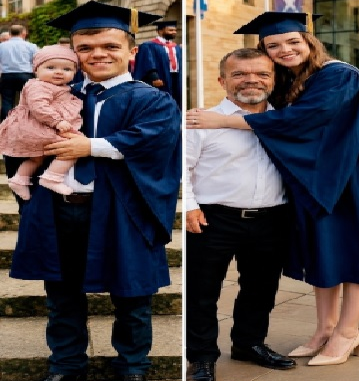
People often told me I was lucky to have such an incredible father.
I always agreed.
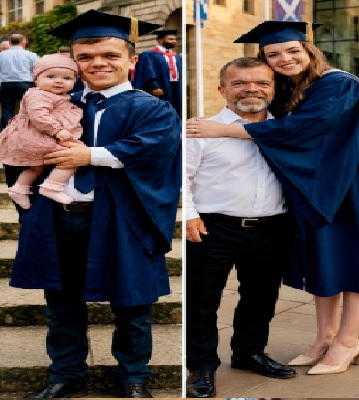
What they didn’t know was that he had become both my mother and my father before I was even old enough to remember either role.
According to every story I had ever been told, my mother left when I was just three months old.
She packed a suitcase while my father was at work, left me sleeping in my crib, and disappeared without leaving a note.
No goodbye.
No explanation.
No forwarding address.
Only silence.
For eighteen years, that silence became part of my life.
My father, Daniel, never spoke badly about her.
Not once.
Whenever I asked where she was, he gave the same quiet answer.
“I honestly don’t know.”
As a child, I accepted it.
As a teenager, I stopped asking.
Some questions hurt too much to keep repeating.
Dad worked harder than anyone I knew.
He drove a city bus during the day and repaired appliances in the evenings.
Weekends weren’t for resting.
They were for mowing neighbors’ lawns, painting fences, fixing leaking roofs—whatever paid enough to keep our small household running.
Money was always tight.
Love never was.
He learned how to braid hair even though I was a boy, simply because my cousin needed help one morning and no other adult was around.
He attended every parent-teacher conference alone.
Every birthday.
Every school play.
Every basketball game.
Whenever forms asked for “Mother’s Name,” he’d quietly leave the line blank.
When classmates asked why my mom never came to school events, I usually shrugged.
“She’s gone.”
Children rarely knew what to say after that.
Neither did adults.
Growing up without a mother didn’t make me angry.
It made me curious.
Sometimes, late at night, I’d imagine she had a good reason.
Maybe she’d been sick.
Maybe she’d lost her memory.
Maybe she’d spent years searching for us.
Movies have a way of making impossible reunions seem believable.
Reality usually doesn’t.
When I turned sixteen, I found an old family photo hidden inside a drawer.
It showed my parents smiling while holding me as a newborn.
My mother looked happy.
Not forced.
Not pretending.
Genuinely happy.
I carried the picture downstairs.
“Dad?”
He looked up from repairing a toaster.
“Can I ask you something?”
“Always.”
“Did she love me?”
He stared at the photograph for a long time before answering.
“I believe she did.”
“Then why leave?”
He closed the toolbox.
“I don’t know.”
That answer frustrated me more than ever.
Yet somehow I believed him.
If he knew the truth, he would have told me.
That was simply the kind of man he was.
The years passed.
I graduated near the top of my high school class.
I earned a scholarship to study engineering.
The graduation ceremony arrived on a bright Saturday morning in June.
Dad had polished his only suit the night before.
He looked nervous.
“I’ve never been this dressed up.”
I laughed.
“You look great.”
“You think?”
“You look like someone’s proud father.”
“I am.”
His eyes watered.
“So incredibly proud.”
The ceremony began.
Families filled every seat.
Teachers smiled proudly.
Cameras flashed constantly.
As students lined up to receive diplomas, I searched the crowd until I found Dad.
He sat in the third row.
Clapping before my name had even been called.
Then everything changed.
The back doors of the auditorium opened.
A woman stepped inside.
She looked around nervously before locking eyes with me.
Time stopped.
Even from fifty feet away, I somehow knew.
It was her.
I had never seen her in eighteen years.
Yet I recognized her instantly from that faded photograph.
My mother.
She walked slowly down the aisle while whispers spread through the audience.
Dad turned.
The moment he saw her, all the color disappeared from his face.
He stood frozen.
The principal continued speaking, unaware anything unusual was happening.
My mother reached the front row.
She looked directly at Dad.
Then at me.
“I need to say something.”
The microphone happened to be sitting on a nearby podium.
Before anyone could react, she picked it up.
“I’m sorry for interrupting.”
The auditorium fell completely silent.
“My name is Rebecca.”
Her voice trembled.
“I’m his mother.”
Hundreds of people turned toward me.
My heart pounded so loudly I barely heard what came next.
“I know I don’t deserve to be here.”
“No,” Dad whispered.
She continued anyway.
“For eighteen years, everyone believed I abandoned my son.”
She looked toward me with tears streaming down her face.
“I didn’t.”
The room erupted with confused murmurs.
I looked at Dad.
His expression hadn’t changed.
Only shock.
Nothing else.
“What do you mean?” someone asked from the audience.
She took a shaky breath.
“Eighteen years ago, I suffered severe postpartum depression.”
“I wasn’t sleeping.”
“I wasn’t thinking clearly.”
“I became convinced my son would be safer without me.”
Doctors diagnosed her weeks after I was born.
She had voluntarily admitted herself to a psychiatric hospital after experiencing terrifying thoughts she couldn’t control.
“I begged Daniel to tell everyone I was receiving treatment.”
She looked toward my father.
“He refused.”
Dad finally spoke.
“I made the decision.”
The entire auditorium stared at him.
“I told everyone she left.”
My mind spun.
“What?”
He walked slowly toward the stage.
“I thought protecting her privacy was the right thing.”
He looked at me.
“I never imagined it would become permanent.”
He explained everything.
Back then, mental illness carried enormous stigma in our small town.
People lost jobs.
Friends disappeared.
Families became gossip.
He feared that if neighbors discovered my mother had been hospitalized for severe postpartum depression, she’d never have a chance to rebuild her life.
So he created a different story.
One where everyone blamed him less than they would judge her.
Only…
Recovery took much longer than anyone expected.
Months became years.
During treatment, she realized she wasn’t emotionally capable of raising a child safely.
She signed temporary custody papers.
Then extended them.
Again.
And again.
Each year, guilt grew heavier.
Eventually, she believed returning would only disrupt the stable life Dad had built for me.
So she stayed away.
Not because she stopped loving me.
Because she believed I was better off.
“I was wrong,” she whispered.
“So terribly wrong.”
I couldn’t move.
Everything I’d believed my entire life had shifted beneath my feet.
Dad reached into his jacket pocket.
“I suppose it’s time.”
He removed a thick envelope.
“I’ve carried this for eighteen years.”
He handed it to me.
“She wrote you a letter every birthday.”
“What?”
“I never gave them to you.”
Inside were eighteen sealed envelopes.
Each one labeled with a different age.
Age One.
Age Two.
Age Three.
All the way to Age Eighteen.
“I thought someday…” Dad said quietly.
“…you should decide whether you wanted to read them.”
I looked at my mother.
“You wrote every year?”
She nodded.
“Every birthday.”
“I never stopped wondering what your favorite color was.”
“If you liked sports.”
“If you were healthy.”
“If you still smiled the way you did as a baby.”
Tears blurred my vision.
The audience remained completely silent.
No one reached for the exits.
No one checked their phones.
Hundreds of strangers witnessed one family trying to find its way back together.
I stepped off the stage.
Walked toward my father first.
Wrapped my arms around him.
“You raised me.”
“I’ll always be your dad.”
“You already are.”
Then I turned toward my mother.
Neither of us knew what to do.
Eighteen years cannot disappear in a single moment.
Finally, she whispered,
“I don’t expect forgiveness.”
“I just wanted you to know the truth.”
I looked at the envelopes in my hands.
“You missed eighteen birthdays.”
“I know.”
“You missed first steps.”
“I know.”
“You missed everything.”
She nodded through tears.
“I did.”
After a long silence, I asked the only question that truly mattered.
“Would you like a chance to stop missing things now?”
She covered her face and began crying harder than anyone I’d ever seen.
The audience broke into applause.
Not because everything had been fixed.
Because hope had returned.
Healing rarely happens all at once.
It certainly didn’t for us.
Over the following months, we met for coffee.
Then lunches.
Then family dinners.
Some conversations were joyful.
Others were painfully difficult.
I read every birthday letter.
Some made me laugh.
Others left me unable to speak.
They contained stories about her recovery, advice for future birthdays, hopes for the man she prayed I would become, and endless reminders that not a single day had passed without her thinking about me.
Years later, when I graduated from college, both of my parents sat side by side in the front row.
Dad still cried first.
Mom laughed through her tears.
After the ceremony, someone asked if it felt strange having both of them there together.
I smiled.
“Not strange.”
“Just overdue.”
Life isn’t always divided into heroes and villains.
Sometimes it’s divided into people who make impossible decisions while carrying invisible pain.
My father gave me stability when I needed it most.
My mother fought a battle few people understood, then spent years carrying the weight of choices she wished she could undo.
Neither was perfect.
Both loved me.
And standing between them that afternoon, diploma in one hand and eighteen unopened letters in the other, I realized something that changed my life forever:
The truth doesn’t always erase the past.
But sometimes, when spoken with honesty and courage, it can open a door that grief kept locked for years.
That graduation day wasn’t only the day I received a diploma.
It was the day I finally graduated from a lifetime of unanswered questions into a future where my family, though imperfect, had one priceless gift we had been missing all along—
The truth.