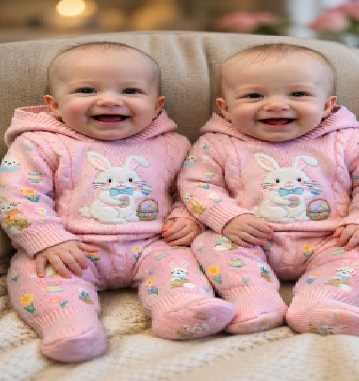
The first time I heard them cry, I assumed their mother was only a few rows away.
The flight had already been delayed twice before finally leaving the gate. Passengers were exhausted, children were restless, and the cabin lights had been dimmed for the overnight journey. I was returning home after attending my father’s funeral, carrying nothing but a worn suitcase and a heart that felt impossibly heavy.
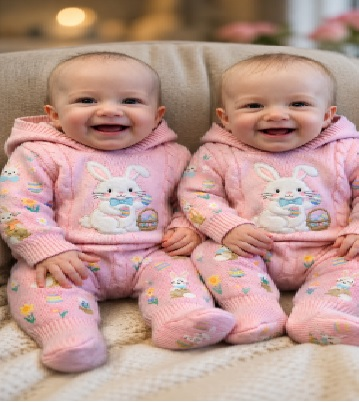
The cries grew louder.
Not the impatient cries of babies demanding a bottle, but frightened, desperate cries that echoed through the nearly silent cabin.
A flight attendant hurried down the aisle, followed by another.
Minutes passed.
Then someone asked the question no one wanted to hear.
“Where are the babies’ parents?”
No one answered.
The attendants searched every row, checked passenger lists, questioned nearby travelers, and opened every overhead compartment as though a parent might somehow appear. The aircraft had already reached cruising altitude, making it impossible to return immediately.
The twins had been discovered sleeping together in a portable bassinet placed across two empty seats near the back of the plane. Beside them sat a diaper bag containing bottles, extra clothes, blankets, and a handwritten note with only three words:
Please forgive me.
Nothing else.
No names.
No addresses.
No explanation.
The captain informed the authorities before the plane landed. Police officers boarded immediately after arrival, questioning every passenger while social workers carefully carried the babies away.
I thought that would be the last time I ever saw them.
I was wrong.
A week later, curiosity led me to read every newspaper article about the mysterious twins. Authorities had searched airport surveillance, interviewed airport staff, and examined passenger records. The woman believed to have boarded with the babies had vanished before investigators could identify her. Fake identification had been used during check-in, leaving almost no trace behind.
The infants had become national news.
People argued endlessly.
Some called their mother heartless.
Others believed she must have been running from unimaginable danger.
Months passed.
The headlines faded.
Everyone moved on.
Everyone except me.
I had spent thirty-eight years believing I would never become a parent. After several failed attempts to adopt and countless disappointments, I had quietly accepted a life that would remain childless.
Yet I couldn’t stop thinking about those twins.
I contacted the social services office simply to ask how they were doing.
Privacy laws prevented them from sharing details.
Still, one conversation led to another.
Eventually I learned they had not yet found a permanent family.
Many prospective parents wanted one baby.
Very few wanted two.
Especially infants whose backgrounds remained a complete mystery.
Without fully understanding why, I submitted an application.
The process lasted nearly fourteen months.
Interviews.
Financial evaluations.
Home inspections.
Medical examinations.
Psychological assessments.
There were moments when I nearly gave up.
Then one rainy afternoon, my phone rang.
“They’re yours,” the social worker said.
I cried before she even finished the sentence.
The twins arrived carrying far more than tiny backpacks.
They carried fear.
Confusion.
Nightmares.
Though they had been too young to remember the flight consciously, trauma often leaves invisible marks.
I named them Ethan and Emma after discussing it with the adoption agency, which had never discovered their original names.
They grew into wonderfully different people.
Emma loved books before she could properly read them.
She filled notebooks with stories, poems, and impossible inventions.
Ethan preferred building things.
If something broke, he believed it could always be repaired.
Sometimes better than before.
Our house became noisy.
Messy.
Alive.
Every birthday felt like a miracle.
Every school concert.
Every scraped knee.
Every report card.
Every family photograph reminded me how unexpectedly life could rewrite itself.
Of course, difficult questions eventually came.
“Why don’t we have baby pictures?”
“Did our first mother love us?”
“Why were we left alone?”
I never lied.
“I don’t know,” I always answered.
“But I know this.
Someone’s worst moment doesn’t define your worth.”
That became our family’s motto.
Years passed almost unnoticed.
High school graduation arrived far sooner than I expected.
Emma earned a scholarship to study journalism.
Ethan planned to become an aerospace engineer.
Watching them receive their diplomas felt strangely similar to watching an airplane disappear into the clouds.
Pride mixed with uncertainty.
Hope mixed with fear.
The next chapter belonged to them.
Three weeks after graduation, everything changed.
A woman appeared at my front door.
She looked no older than fifty, though grief had etched decades into her face.
She carried a weathered leather folder.
Her hands trembled.
“I know this is impossible,” she whispered.
“But I believe your children are mine.”
Every instinct urged me to close the door.
Instead, I invited her inside.
She introduced herself as Amelia.
For eighteen years she had searched across countries, hospitals, adoption records, and legal archives.
She had finally located us through newly released court documents.
“I never abandoned them willingly,” she said.
I’d heard enough excuses in life to recognize rehearsed stories.
This didn’t feel rehearsed.
She placed a single document on my dining table.
It was a certified court order.
The paper had yellowed with age.
Official government seals covered every page.
The document revealed something I had never imagined.
Eighteen years earlier, Amelia had been forced into hiding after agreeing to testify against an international criminal organization involved in financial fraud and human trafficking.
Several key witnesses had already disappeared.
Authorities believed Amelia and her newborn twins were immediate targets.
An emergency protection plan had been created.
Its purpose was simple.
Separate the babies.
Erase every trace connecting them to their mother.
Give investigators time to dismantle the organization before the children could be safely reunited.
But the operation collapsed.
Corrupt officials leaked confidential information.
Amelia disappeared into witness protection.
The babies entered the child welfare system under false identities.
Critical files vanished.
The reunion that had been scheduled months later never happened because the records no longer existed.
For eighteen years, both sides believed the other had disappeared forever.
I read every page twice.
Then a third time.
Every signature was verified.
Every court seal authentic.
The impossible story was true.
Silence filled the room.
Finally Emma spoke.
“You spent eighteen years looking for us?”
Amelia nodded through tears.
“Every birthday.”
“Every Christmas.”
“Every Mother’s Day.”
“I never stopped.”
Ethan looked toward me.
“You knew none of this.”
“I didn’t,” I answered honestly.
“And if I had, I would have helped you find her.”
The weeks that followed were unlike anything I could have prepared for.
There were awkward conversations.
Long walks.
Old photographs.
DNA tests that confirmed what the documents already proved.
No one tried replacing anyone.
No one competed for love.
Instead, something unexpected happened.
Our family grew larger.
Emma gained another mother without losing the one who raised her.
Ethan discovered where his smile had come from.
Amelia learned that strangers can sometimes become heroes without ever intending to.
One evening she handed me another envelope.
Inside was a handwritten letter.
“If you had not chosen them,” she wrote, “my children would have grown up believing they had been unwanted.
Instead, they became extraordinary because you loved them before you knew who they were.
No legal document could ever measure that gift.”
Years later, people still ask whether I felt angry when Amelia appeared.
The truth surprises them.
Love is not ownership.
Parenthood is not a title awarded by biology alone.
It is built through midnight fevers, school lunches, bedtime stories, difficult conversations, patient forgiveness, and thousands of ordinary moments that quietly become a lifetime.
Amelia gave Ethan and Emma life.
I helped them live it.
Neither truth erased the other.
Sometimes the greatest miracle is not discovering where someone came from.
It is realizing that a heart has room for every person who truly belongs there.
Whenever I hear an airplane overhead now, I remember the frightened cries that first changed my life. What began as a mystery on a quiet overnight flight became the story of a family no one could have predicted—a family created by loss, sustained by hope, and ultimately reunited by the courage of a woman who never stopped searching and a single forgotten document that finally brought the truth into the light.