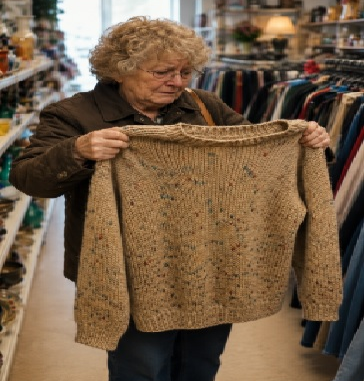
My wife, Linda, spent years sewing handmade gifts for our grandchildren. Every birthday and every Christmas, she started planning months in advance—carefully choosing fabrics, matching colors, and adding tiny embroidered details that reflected each child’s personality.
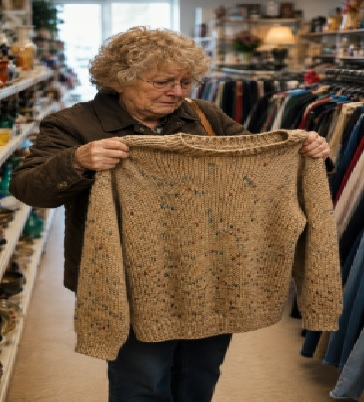
To anyone else, they looked like beautiful handmade presents.
To our family, they were something much more.
Every stitch carried a story.
Every pattern held a memory.
Every finished piece reminded us that love doesn’t always arrive wrapped in expensive paper. Sometimes it arrives folded neatly inside a quilt, stitched into a stuffed animal, or hidden in the pocket of a homemade backpack.
Linda believed that handmade gifts lasted longer than toys.
“Toys get forgotten,” she used to say while adjusting her reading glasses.
“But something made with love grows more valuable every year.”
She began sewing long before we had grandchildren.
When our daughter Emily was born, Linda made tiny blankets because we couldn’t afford store-bought ones.
Later came school backpacks.
Halloween costumes.
Curtains for bedrooms.
Pajamas.
Baby bibs.
Pillows.
Table runners.
Even matching Christmas stockings.
Nothing was ever rushed.
She would spend weeks choosing exactly the right thread.
“If the back isn’t neat,” she often said, “the front can never truly be beautiful.”
That sentence somehow described more than sewing.
It described her.
After forty-six years of marriage, I could predict nearly every part of our routine.
Coffee at six.
Garden at seven.
Fabric shop every second Thursday.
Quilting club every Tuesday afternoon.
Our grandchildren knew exactly where to find her.
Usually behind the old sewing machine in the sunroom.
The machine itself was older than our oldest son.
It hummed with a comforting rhythm that filled the house almost every afternoon.
The grandchildren loved sitting beside her.
Not because sewing interested them.
Because Linda told stories while she worked.
Stories about growing up on a farm.
About meeting me at a county fair.
About making mistakes.
About fixing mistakes.
“Thread is forgiving,” she’d tell them.
“People should be too.”
The oldest grandchild, thirteen-year-old Sophie, loved drawing.
So Linda embroidered tiny paintbrushes onto her quilt.
Eight-year-old Mason dreamed of becoming an astronaut.
His blanket glowed with stitched constellations.
Little Ava adored butterflies.
Her backpack contained dozens of embroidered wings hidden among flowers.
No design was ever repeated.
“Every child deserves something made only for them.”
That became her tradition.
Nobody asked for these gifts.
Everyone waited for them.
Then, two years ago, everything changed.
Linda was diagnosed with Parkinson’s disease.
At first, the symptoms were subtle.
A slight tremor.
A little stiffness.
She laughed them off.
“I’m just getting older.”
But months passed.
The tremor became stronger.
Threading a needle took longer.
Cutting fabric became difficult.
One afternoon I found her sitting silently beside the sewing machine.
The needle remained untouched.
“I can’t keep my hands steady,” she whispered.
It was the first time I’d ever seen her cry because of sewing.
She wasn’t worried about herself.
She was worried about Christmas.
“What about the children?”
“They’ll understand.”
“I know they will.”
“But I promised.”
That autumn she fought harder than I had ever seen.
Some days a single embroidered flower required three hours.
Other days she couldn’t sew at all.
Still she refused to stop.
By December every grandchild received another handmade gift.
None of them noticed the tiny imperfections.
Only Linda did.
“They’re crooked.”
“They’re beautiful,” I answered.
She smiled politely.
I knew she didn’t believe me.
The following spring, the tremors worsened.
Her doctor gently suggested it might be time to retire the sewing machine.
Retire.
Such a simple word.
It sounded like someone had quietly closed a chapter of her life.
She covered the machine with its fabric dust cover.
For weeks she never uncovered it again.
The house felt strangely quiet.
No humming motor.
No scattered thread.
No half-finished projects covering the dining room table.
Then, one Saturday afternoon, our youngest granddaughter, six-year-old Ellie, wandered into the sunroom.
“Grandma?”
“Yes?”
“Why aren’t you making anything?”
Linda forced a smile.
“My hands don’t work the same anymore.”
Ellie thought about that for several seconds.
Then she disappeared.
An hour later, every grandchild arrived.
Nobody had called us.
Apparently Ellie had called everyone.
Sophie carried sketchbooks.
Mason brought fabric scraps.
Ava carried buttons sorted by color.
The older grandchildren rolled in boxes of thread from Linda’s sewing cabinet.
“What are all you doing?” Linda asked.
Sophie smiled.
“You taught us.”
“Taught you what?”
“That handmade gifts matter.”
Mason placed a notebook on her lap.
“We made a list.”
Inside were names.
Neighbors.
Hospital patients.
Children at the local shelter.
Residents of a nursing home.
People who might appreciate handmade blankets.
Linda looked confused.
“But I can’t sew anymore.”
“No,” Sophie answered gently.
“But you can teach.”
Silence filled the room.
The following Tuesday, instead of attending quilting club alone, I drove Linda and six grandchildren to the community center.
The quilting group welcomed them immediately.
For the first few weeks Linda simply demonstrated.
How to thread a machine.
How to pin fabric.
How to hide seams.
How to repair mistakes instead of throwing projects away.
The children watched carefully.
Slowly they began sewing themselves.
Their stitches wandered.
Corners refused to line up.
Buttons attached crookedly.
Linda laughed more during those afternoons than she had in months.
“You’ve sewn the pocket shut,” she’d tell Mason.
“I know,” he’d reply proudly.
“I’ll fix it.”
Exactly as she had taught him.
The project grew larger.
Neighbors donated fabric.
Retired tailors volunteered.
Teenagers needing community service hours joined.
Within six months more than sixty handmade quilts had been donated across the county.
But something even more meaningful happened.
Linda stopped apologizing for what her hands could no longer do.
Instead, she celebrated what dozens of other hands had learned because of hers.
On her seventy-second birthday, the grandchildren presented her with one final surprise.
Not jewelry.
Not flowers.
Not a cake.
They uncovered the old sewing machine.
It had been professionally restored.
Its faded black paint gleamed once again.
Attached to it was a brass plaque.
It read:
Linda’s Legacy Machine
Every stitch begins with kindness.
Beside it stood a large wooden chest.
Inside rested dozens of quilts sewn by the grandchildren over the past year.
Some were excellent.
Others were wonderfully imperfect.
Each carried a small embroidered label.
Not with the maker’s name.
But with something Linda had always said.
“Made with love lasts forever.”
She ran trembling fingers across the colorful fabrics.
Then quietly asked,
“Did all of you really make these?”
Ellie grinned.
“We had help.”
“From who?”
“You.”
Linda looked puzzled.
“I didn’t sew any of these.”
“No,” Sophie replied.
“You stitched them into us.”
No one in the room managed to hide their tears.
Today, the old sewing machine still sits in the sunroom.
Linda no longer uses it the way she once did.
Instead, every Saturday afternoon, children and grandchildren gather around it.
Some sew.
Some cut fabric.
Some simply listen to stories.
The machine hums again—not because one woman continues working alone, but because an entire family carries forward what she began decades earlier.
People sometimes ask Linda whether she misses sewing.
She always smiles before answering.
“I thought my greatest accomplishment was making quilts.”
Then she looks around the room at grandchildren patiently helping one another thread needles, untangle thread, and repair uneven stitches.
“I was wrong.”
“My greatest accomplishment was teaching people to keep sewing after I couldn’t.”
Looking back now, I realize the most precious gifts Linda ever created were never the blankets, backpacks, stuffed animals, or Christmas stockings.
Those will eventually wear out.
Fabric fades.
Thread weakens.
Colors soften with time.
But the patience she stitched into our family, the generosity she quietly practiced every day, and the belief that love is strongest when it is made by hand have become a legacy that no passage of time can unravel.
Every birthday and every Christmas, new handmade gifts still appear beneath our family tree.
Some are simple.
Some are extraordinary.
None are perfect.
Just the way Linda always said the best gifts should be.
Because perfection never made a family stronger.
Love did.
And love, like the finest thread, continues connecting one generation to the next—one careful stitch at a time.